Dr Joe Vitale
The Best Speaker for Your Next Event
Maybe. If you’re curious about having me speak, present or in any way participate at your next meeting, please go see https://joevitale.com/booking
Expect Miracles.
Ao Akua,
Dr Joe

Your Silent Enemy
I just posted a six question quiz to help reveal the silent hidden belief possibly keeping you from attracting and attaining your goals and intentions.
It’ll take about three minutes or less to complete.
Answer will be instant.
It’s free.
Go see https://zerolimitsliving.com/
Expect Miracles.
Ao Akua
Dr Joe
The Boy Who Fed the River
The Boy Who Fed the River
by Dr Joe Vitale
Sit back and let me tell you a story…
There was once a boy named Eli who lived at the edge of a small town where a river ran slow through the willows.
Eli was the kind of boy who noticed things.
He noticed the way morning light bent through water.
He noticed which neighbors had flowers and which had none.
And he noticed, one autumn, that old Mrs. Calloway who lived three houses down had stopped coming outside.
He didn’t know why.
He was nine years old, and the reasons grown-ups stayed inside were often invisible to him.
But the noticing was enough.
One afternoon, Eli picked the last of the sunflowers from his mother’s garden — six tall, golden ones — and carried them, somewhat awkwardly, up Mrs. Calloway’s porch steps.
He knocked three times.
The door opened slowly, and Mrs. Calloway looked out at him through tired eyes.
“What’s this?” she asked.
“They’re for you,” Eli said. “Last summer you gave me one of your tomatoes when I was walking by and I never said thank you properly. So. These are the thank you.”
Mrs. Calloway was quiet for a long moment.
Then something in her face shifted, the way a cloud moves off a field and suddenly everything is warmer.
“Come in,” she said. “I’ll make cocoa.”
Eli didn’t know it then — and you might not know it yet either — but he had just stepped into something. Not into a house. Into something much larger. Something that had been waiting for him, the way a river waits for rain.
Inside, the house smelled like cinnamon and old books.
Mrs. Calloway moved carefully to the kitchen, and Eli sat at the table and looked around at shelves packed with stories.
“Have you ever heard of a river that runs in a circle?” she asked, setting two mugs down and settling into her chair with the deliberate grace of someone who has learned that slow can be sacred.
“Rivers don’t run in circles,” Eli said honestly.
“Most don’t.” She smiled. “But there is one. You can’t see it with your eyes. But you can feel it when you step into it.”
She wrapped her hands around her mug.
“It’s been running since before your grandmother’s grandmother was born. It carries things. Not water. Gratitude. Kindness. Generosity. These things move in it, and they move fast, Eli. Faster than you’d believe.”
Eli leaned forward a little. Children always lean forward when something true is being said, even before they know what it is.
“How do you get in?” he asked.
“You just did,” she said simply.
Three days later, something strange happened.
Eli’s teacher, Mr. Darne, stopped him after class and said, “I’ve been meaning to tell you — that story you wrote last month about the silver fish? I showed it to my brother. He runs a young writers’ workshop in the city. He’d like to invite you.”
Eli stared.
“Me?”
“You,” said Mr. Darne.
That evening, Eli told his mother. She listened, and then she was quiet in the particular way mothers are quiet when they’re trying not to show that they’re moved.
“Did you do something kind recently?” she asked.
Eli thought about the sunflowers. He thought about Mrs. Calloway’s face when the cloud moved off it.
“Yes,” he said. “But that had nothing to do with this.”
His mother smiled.
“You sound very certain for someone who doesn’t understand rivers yet.”
The workshop was on a Saturday in November, in a building with tall windows. There were twelve children there, and Eli sat next to a girl named Priya who wrote poems about elephants and wasn’t embarrassed about it. They became friends the way children sometimes do — completely, and in an afternoon.
Before the session ended, the instructor asked each child to write one sentence about what they were grateful for and leave it, unsigned, in a jar on the table.
“Why?” asked a boy near the back.
“Because gratitude, when it’s spoken aloud — or written down — becomes real,” the instructor said. “It stops being a feeling and becomes a thing. A thing that moves.”
Eli wrote: I am grateful for an old woman who told me about a river.
He folded it and put it in the jar and did not think about it again.
But the river was thinking about him.
Weeks passed.
Winter came.
One afternoon, a small envelope arrived at the house with Eli’s name on it in careful handwriting. Inside was a letter from Mrs. Calloway.
Dear Eli,
When you brought me those flowers, I had been sitting in my house for two weeks trying to decide if I still mattered to anyone. Your knock on the door was the answer. I have started going outside again. I have started writing again — I used to write, long ago. I want you to have something.
Inside this envelope you’ll find a book. It belonged to my father. He told me it was the book that made him believe words could build worlds. I think it belongs with you now.
The book was thin and old, its cover soft as worn cloth.
On the inside page, in faded pencil, someone had written: Pass it forward when the time comes.
Eli held it for a long moment.
He could feel something — not in his hands exactly, but somewhere behind them.
A current.
A hum.
The sensation of water moving where no water was.
He understood now what Mrs. Calloway had meant.
You don’t enter the river by wanting to receive.
You enter it by giving without expectation.
You give a thank-you and it becomes a sunflower.
The sunflower becomes a story.
The story becomes a workshop.
The workshop becomes a friend.
A friend becomes a jar full of gratitude.
And somewhere in all of that, a woman decides she still matters, and a boy receives a book that will one day change his life.
Round and round.
Never stopping.
Always moving.
Sacred was the word for it, though Eli was nine and didn’t use that word yet. But he felt it. Children often feel the names of things before they learn them.
That evening he sat by the window and opened the first page.
And the river carried him forward.
The secret is this: you do not wait for the river to reach you.
You step in.
You give something real — a thank-you, a kindness, a true word — and the current takes you.
What returns to you will not look like what you gave.
It never does.
It will be better, and stranger, and more necessary than you knew to ask for.
That is not coincidence.
That is circulation.
That is the oldest law there is.
And now that you have heard it, you already know it’s true — because somewhere in your life, you have felt it.
You have been both the boy with the sunflowers and the woman who opened the door.
Enter the river.
It’s been waiting for you.
Expect Miracles.
Ao Akua,
Dr Joe

You in New Kindness Film
I know the power of being in a movie, since I was in the famous The Secret and of course my own movie Zero Limits.
I’m involved with yet another film, and you could apply to be in it.
The ‘Kindness’ documentary is a transformational film created in collaboration with The Global Kindness Movement and Renee Dutton, exploring kindness as a force for healing, connection, and global change.
Drawing inspiration from real stories and lived experience, the ‘Kindness’ documentary reveals how individuals and communities around the world are awakening to the impact of kindness, compassion, and gratitude.
Through heartfelt stories and insights from leading experts, visionaries, and change makers, the film explores what it looks like to choose kindness, even in challenging times.
If you are a speaker, author, or coach and want a leg up in your career by starring in this new film about Kindness, then apply here: https://kindnessmovie.com/
Expect Miracles.
Love
Ao Akua
dr joe

Kicking MMA Butt at Age 72
Days before I turned 72 years old last month, I received my purple belt in MMA.
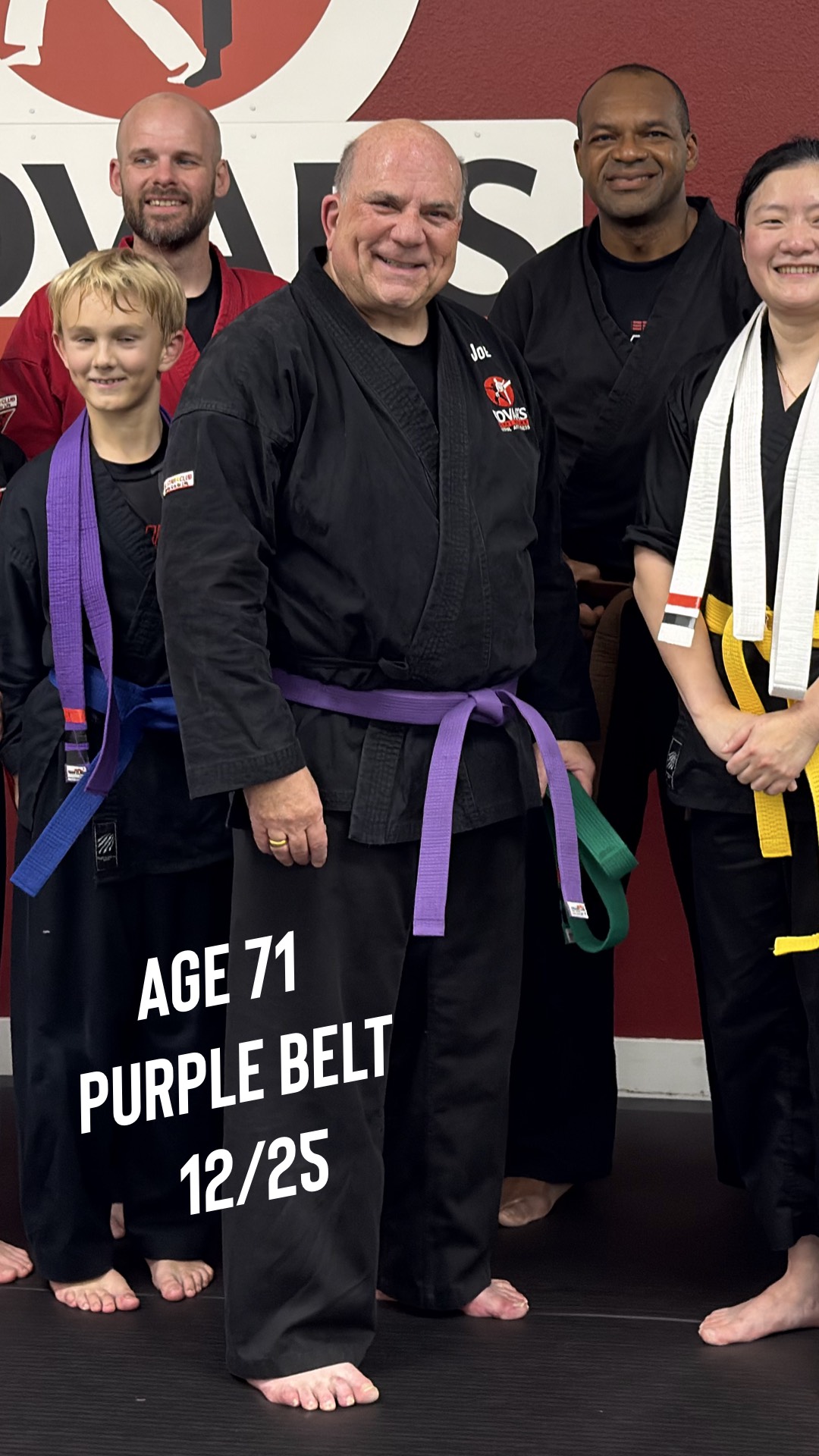
I started taking weekly classes at Kovar’s Mixed Martial Arts days after I turned 71 in 2024.
Just under one year later, right before turning 72 last month, I received my purple belt.
While the purple belt matches my purple Lamborghini Urus SE, I’m not stopping here.
Blue Belt is next.
I won’t stop there, either.
Red belt is after that.
I’ve publicly declared I intend to earn my Black Belt by age 75 – if not sooner.
This goal is not easy.
This past year has not been easy.
But if it were easy, I wouldn’t be writing about it.
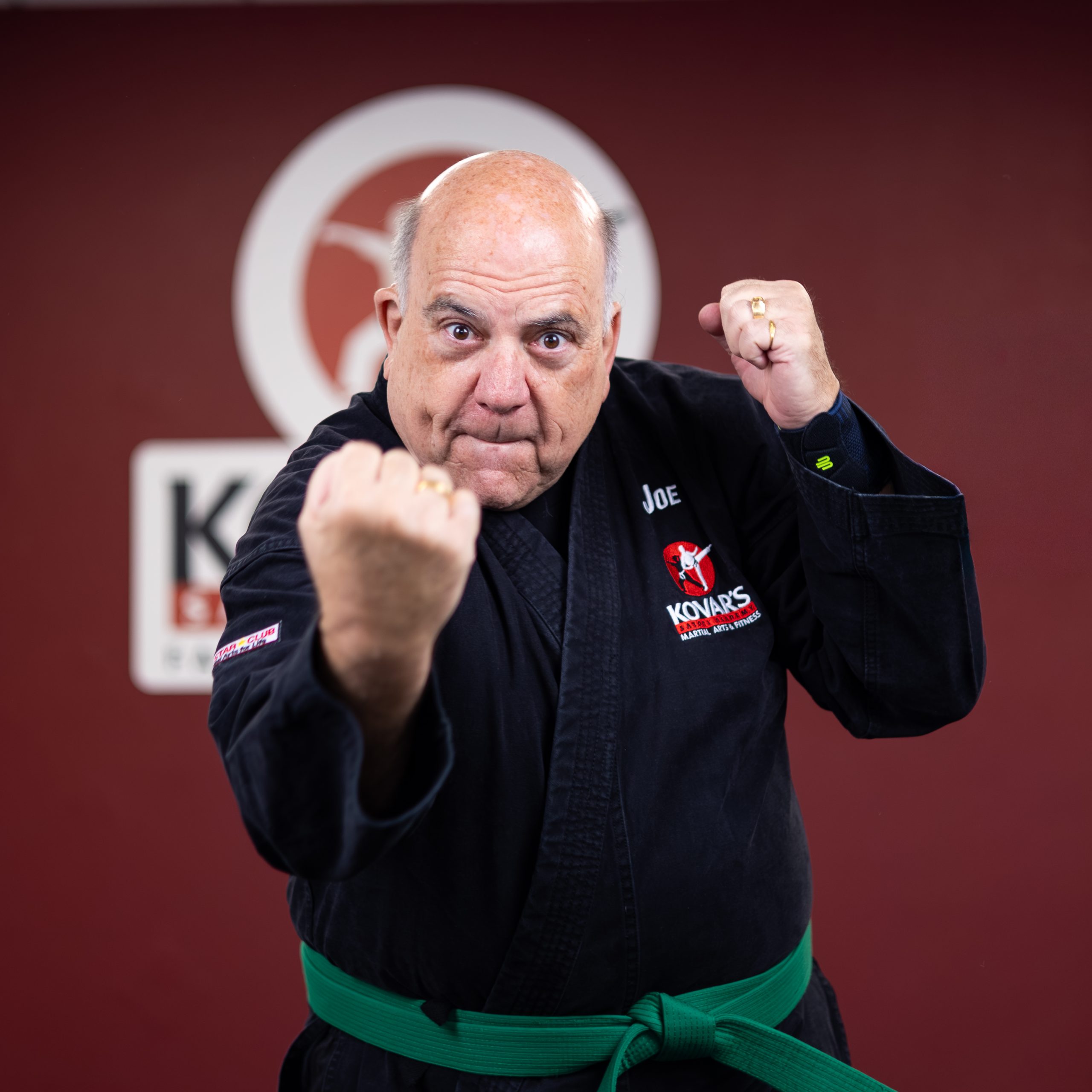
You can hear Hanshi Dave Kovar, the creator of the brand of MMA I’m training in, interview me at https://youtu.be/cwJ_ZiVs_gY?si=gd0Smpbn0gVaBW0Z
What are you going to do to make 2026 great?
The time to begin is NOW.
Expect Miracles.
Ao Akua,
Dr Joe