Tag: miracles coaching
Your Silent Enemy
I just posted a six question quiz to help reveal the silent hidden belief possibly keeping you from attracting and attaining your goals and intentions.
It’ll take about three minutes or less to complete.
Answer will be instant.
It’s free.
Go see https://zerolimitsliving.com/
Expect Miracles.
Ao Akua
Dr Joe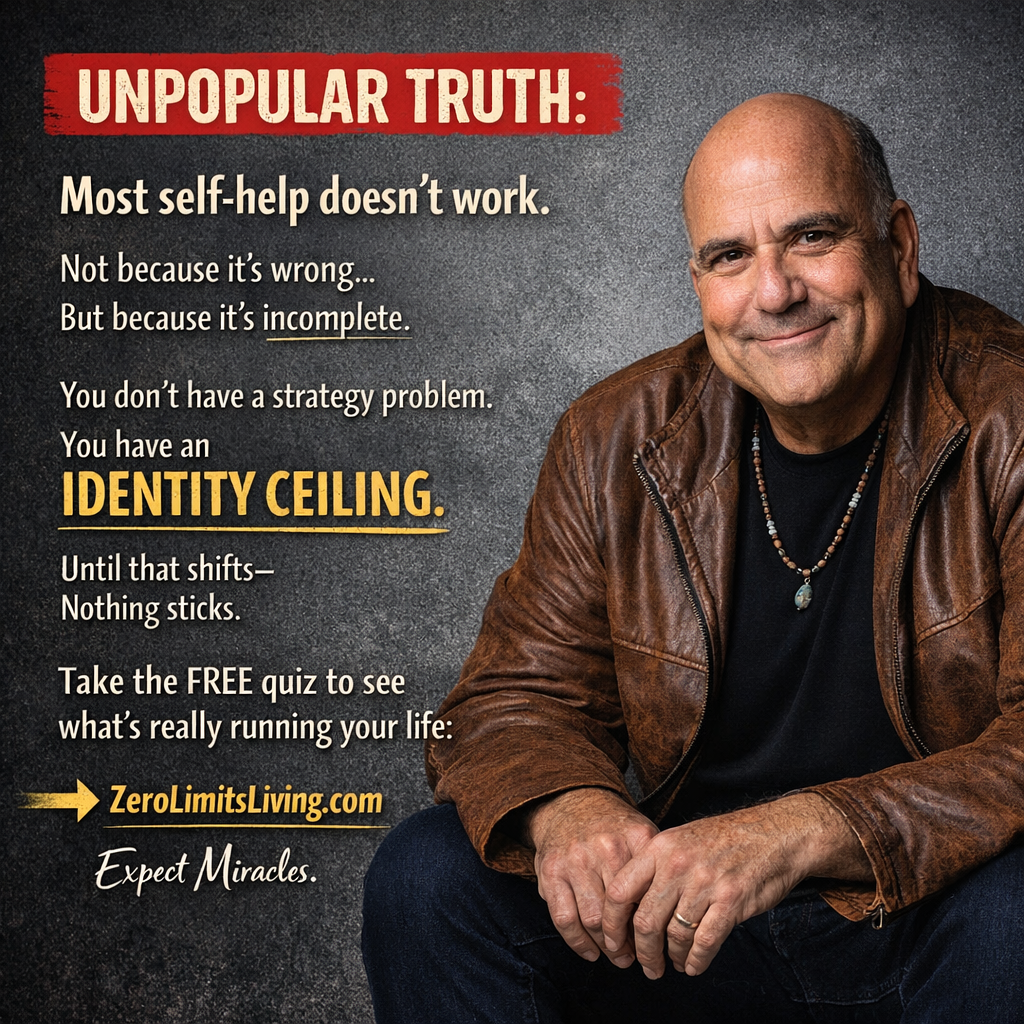
Michael Caine Reveals Three Words
Michael Caine’s Genius Philosophy for Acting—and Life
By Dr. Joe Vitale
Legendary actor Michael Caine once revealed a simple yet profound philosophy that he learned early in his career—and it’s as powerful in life as it is on the stage:
“Use the difficulty.”
That’s it.
Three words.
But like most great truths, it’s deceptively simple.
Caine explains the advice was given to him by a theater director after he struggled with an unexpected moment during a performance.
In the middle of a tense scene, a chair was accidentally knocked over and got stuck in a door frame.
Young Caine froze.

The director later pulled him aside and said, “Whatever happens, use it. If the chair falls and it’s a comedy, fall over it. If it’s a drama, throw the chair. Use the difficulty.”
Let that land for a moment.
He didn’t say “ignore the difficulty” or “pretend it didn’t happen.”
He said:
Use it.
Use the Difficulty.
Make it part of the story.
Let the disruption serve the scene.
Caine went on to apply this philosophy not only to his craft as an actor—where accidents are inevitable—but to life itself, where the unexpected is the norm.
And we can too.
Difficulties as Doors
In the grand play of life, chairs fall all the time.
We spill the coffee.
We lose the job.
The deal collapses.
The plane gets delayed.
The lover leaves.
And our first instinct is often to resist, to complain, to try and fix or forget the difficulty.
But what if we took a page from Michael Caine’s playbook?
What if every difficulty was actually a hidden doorway?
That flat tire?
Maybe it’s giving you time to rethink your direction.
That unexpected bill?
Maybe it’s a nudge to upgrade your financial awareness.
That rejection?
Maybe it’s the universe rerouting you to something better.
When you “use the difficulty,” you turn what was meant to stop you into something that propels you.
You don’t deny the disruption—you dance with it.
The Alchemy of Adaptation
Caine often shared that some of his most memorable scenes happened when something went wrong.
A line was flubbed.
A prop failed.
An actor missed their cue.
But instead of breaking character, he embraced the moment.
That made the scene feel real.
Human.
Alive.
It’s the same in life.
The people we admire most are often not those who had it easy, but those who adapted when it got hard.
They didn’t fold.
They didn’t freeze.
They used the difficulty.
They found the gift in the mess.
The meaning in the madness.
The lesson in the loss.
From Obstacle to Opportunity
When you truly embody this philosophy, your relationship with problems changes.
You no longer see obstacles as interruptions but as introductions to something greater.
I have often said and written, “The problem is not the problem. The problem is how you think about the problem.”
Caine’s principle echoes that truth.
Imagine what becomes possible when you start to ask:
How can I use this difficulty?
How can this setback strengthen my story?
How can I make this mistake part of my masterpiece?
Now you’re no longer the victim of circumstance.
You’re the artist shaping it.
Spiritual Judo
In martial arts, there’s a concept called “aiki” in Aikido, or “ju” in Judo.
It’s the idea of blending with the energy of an attack instead of resisting it.
You redirect the force rather than block it.
Now that I’m age 71 and learning Mixed Martial Arts, this practical philosophy is even more relevant.

I use the method in the dojo, and in the den.
Michael Caine’s approach is spiritual judo.
When life comes at you, don’t stiffen—pivot.
Use the energy.
Flip the narrative.
That’s not just elegant.
It’s empowering.
Training Yourself to Use the Difficulty
Here are a few ways to integrate this philosophy into daily life:
- Pause and Breathe – When something goes wrong, take a breath before reacting. Interrupt the old pattern.
- Ask Empowering Questions – “What’s the opportunity here?” “What’s life trying to teach me?”
- Be Playful with Problems – Pretend you’re in a scene and the spilled drink or the awkward moment is part of your script. How can you play it brilliantly?
- Reframe the Narrative – Rewrite the story. Instead of “I failed,” try “I learned.” Instead of “I lost,” try “I grew.”
- Practice on the Small Stuff – Don’t wait for big crises. Use the traffic jam, the missed email, the long line at the store. These are training grounds for transformation.
A Final Scene
Imagine your life as a movie.
The plot twists.
The heart breaks.
The delays.
The surprises.
They’re all part of your character arc.
They deepen the story.
They build your strength, wisdom, and compassion.
So next time life knocks over a metaphorical chair in your path, don’t get rattled. Don’t curse the chaos.
Channel your inner Michael Caine.
Smile slightly.
And say:
“I’ll use it.”
I’ll “Use the Difficulty.”
Because that’s where the magic lives.
In using what is—exactly as it is—to become who you were always meant to be.

Or, as Napoleon Hill put it:
“Every adversity, every failure, every heartbreak, carries with it the seed of an equal or greater benefit.”
Curtain.
Applause.
Encore.
Expect Miracles.
Ao Akua
Dr Joe
PS – You can watch a brief video clip of Michael Caine talking about “Use the Difficulty” here: https://www.tiktok.com/t/ZP8kXmJ3h/
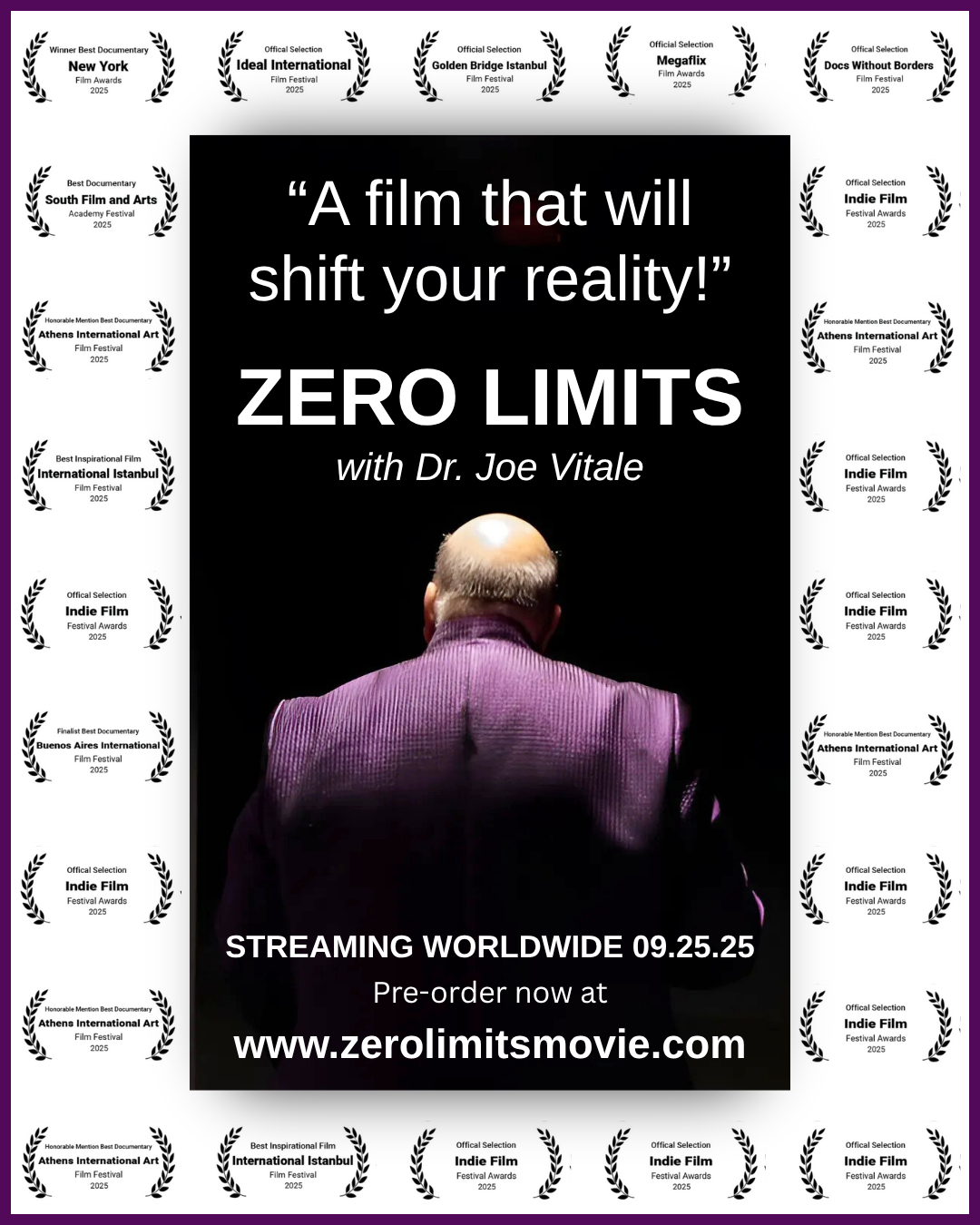
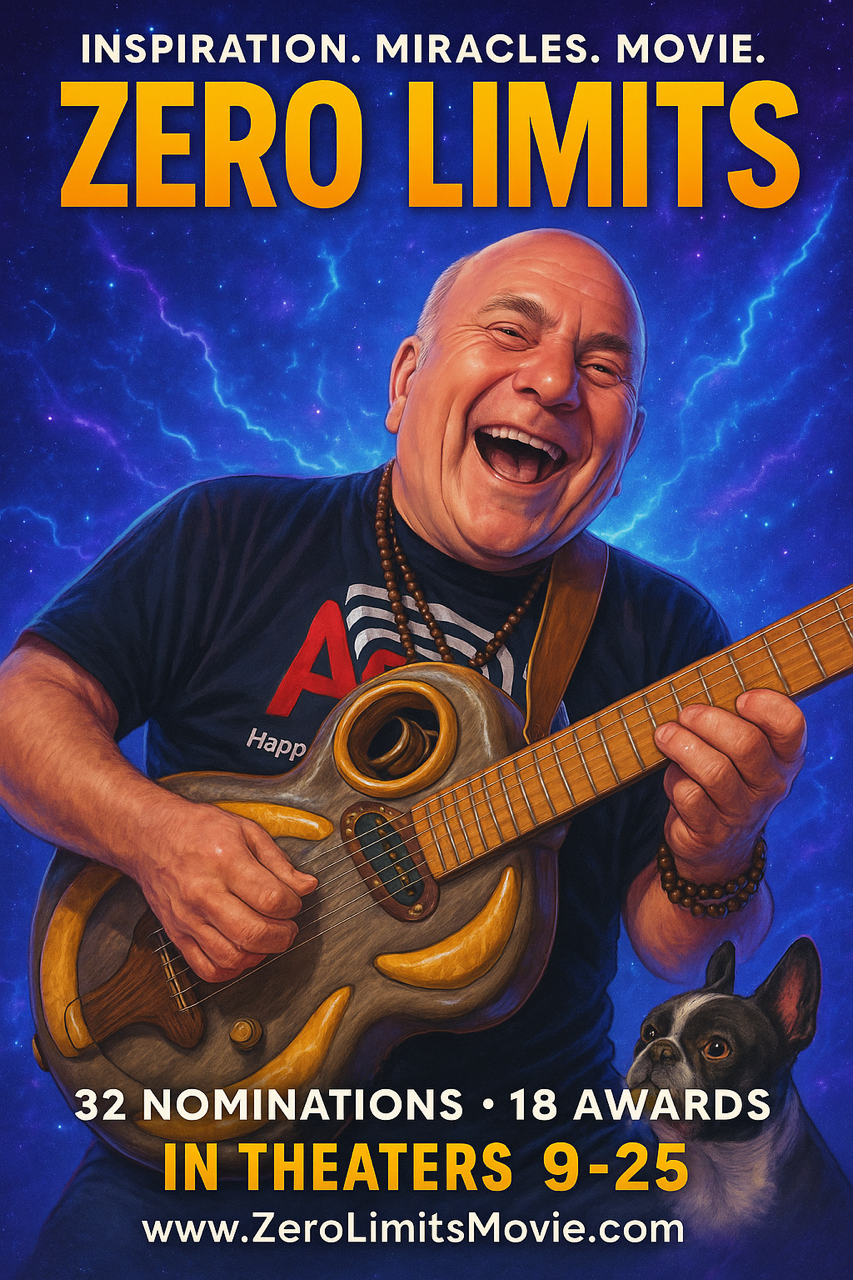
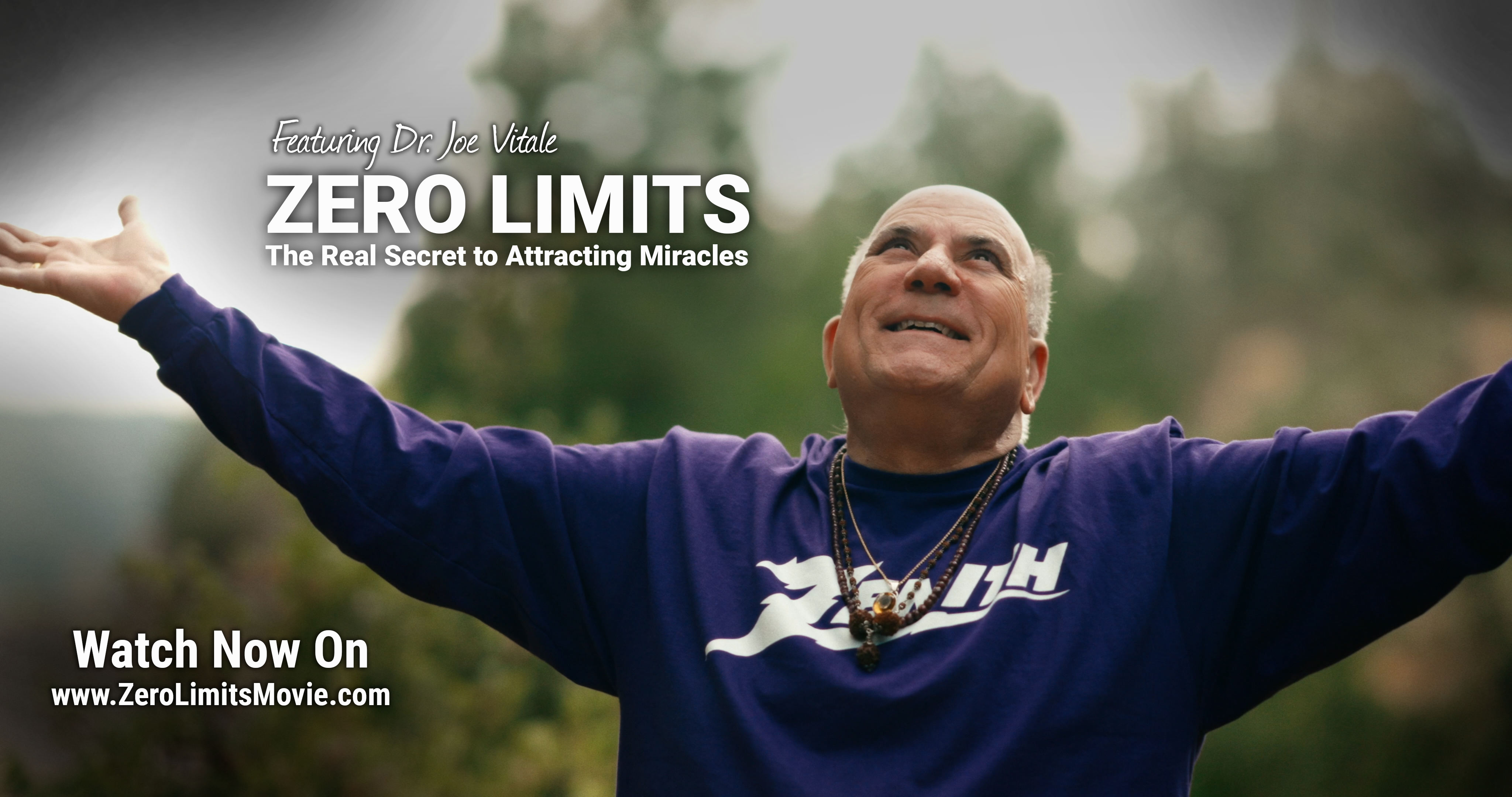
Remember: “Zero Limits” the award-winning new film airs globally 9-25-25 on Amazon Prime and Apple TV and at www.ZeroLimitsMovie.com Expect Miracles!
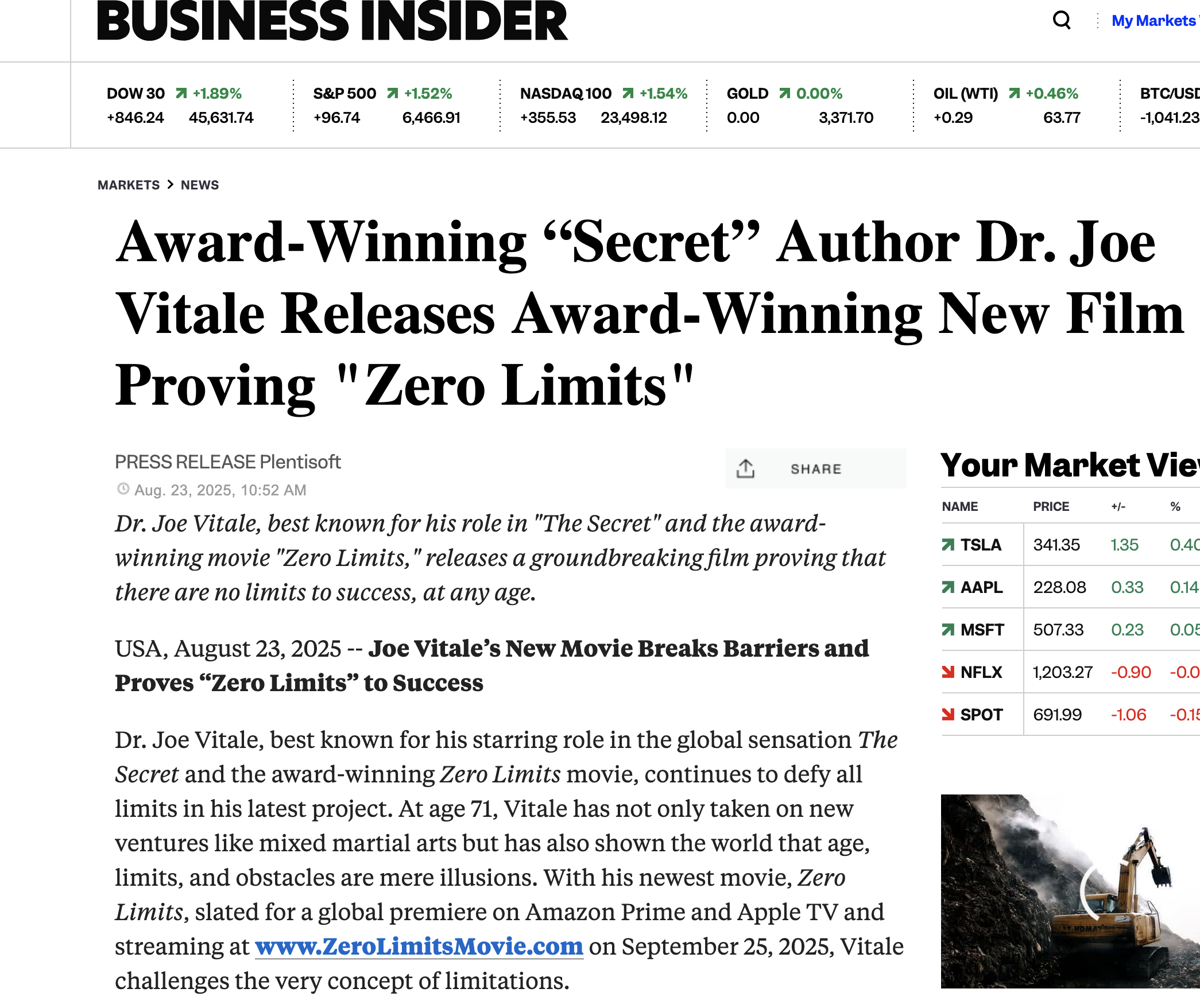
NOTE: Read a brand new article about Zero Limits global release here https://markets.businessinsider.com/news/stocks/award-winning-secret-author-dr-joe-vitale-releases-award-winning-new-film-proving-zero-limits-1035068022
2025 Book Title Survey



Beware Science
I love and hate science.
I love that science continues to try to understand the world at large, and I hate that it is always back pedaling.
I asked ChatGPT how science gets away with this, and to offer examples of when it works, and when it doesn’t.
Here’s the report…

Science: Correcting Itself One Study at a Time
Science is an ever-evolving field. Through rigorous research and experimentation, scientists uncover new insights about the world. However, not every study stands the test of time.
Some findings are later proven wrong, while others continue to hold up under scrutiny.
In this post, we’ll look at five famous scientific studies that turned out to be incorrect, balanced by five that, so far, remain reliable.
5 Studies That Turned Out to Be Incorrect
1. The “Fat is Bad” Study (1950s–1970s)
For decades, fat was labeled as the ultimate dietary villain. A series of studies, led by researcher Ancel Keys, suggested that dietary fat, particularly saturated fat, caused heart disease. This led to a low-fat craze that dominated the food industry. However, recent research has shown that the relationship between fat intake and heart disease is more complex. Healthy fats, like those found in avocados and nuts, are actually beneficial, and sugar and processed carbs may be more harmful than previously thought.
2. Stanford Prison Experiment (1971)
Psychologist Philip Zimbardo’s famous Stanford Prison Experiment suggested that people would quickly conform to abusive behaviors when given authority. The study has been widely criticized for ethical issues, poor methodology, and researcher bias. Participants were often encouraged to act out extreme behaviors, and the results have been difficult to replicate. Today, it’s considered an example of flawed research.
3. Cold Fusion (1989)
In 1989, scientists Stanley Pons and Martin Fleischmann claimed to have achieved cold fusion, a process that would produce unlimited, clean energy at room temperature. The announcement was met with excitement, but soon other researchers failed to replicate the findings. Cold fusion has since been debunked, and it remains a controversial topic.
4. Vaccines Cause Autism (1998)
One of the most damaging incorrect studies was the 1998 paper by Andrew Wakefield that falsely linked the MMR vaccine (measles, mumps, and rubella) to autism. The study was later retracted due to unethical practices and poor methodology, and numerous studies since have found no connection between vaccines and autism. However, the initial report sparked a dangerous anti-vaccine movement.
5. Polygraph Tests as Lie Detectors (1920s–Present)
The polygraph, or lie detector test, has been used for decades to determine whether someone is telling the truth based on physiological responses like heart rate and sweating. However, numerous studies have shown that polygraph tests are unreliable. Stress, fear, and anxiety can produce false positives, and some people can lie without showing physical signs. As a result, polygraphs are not admissible in many courts.
5 Studies That Have Stood the Test of Time (For Now)
1. Theory of General Relativity (1915)
Albert Einstein’s theory of general relativity fundamentally changed our understanding of gravity. It predicts how massive objects like planets and stars warp space-time. This theory has passed many tests over the past century, including the recent detection of gravitational waves in 2015, further proving its accuracy.
2. Double Helix Structure of DNA (1953)
The discovery of the double helix structure of DNA by James Watson and Francis Crick remains one of the most significant breakthroughs in biology. Since its discovery, the structure of DNA has been the foundation for numerous advances in genetics, medicine, and forensic science, and it continues to guide research in the field.
3. Evolution by Natural Selection (1859)
Charles Darwin’s theory of evolution by natural selection explains how species change over time due to environmental pressures. Over 150 years later, the theory remains one of the cornerstones of modern biology. It has been supported by countless studies in fields ranging from paleontology to genetics.
4. Germ Theory of Disease (19th Century)
Proposed by Louis Pasteur and Robert Koch, the germ theory of disease revolutionized medicine. It states that microorganisms are responsible for many diseases. This theory has led to the development of vaccines, antibiotics, and modern hygiene practices, saving countless lives. To this day, it remains a fundamental principle of medical science.
5. Plate Tectonics (1960s)
The theory of plate tectonics explains how the Earth’s outer shell is divided into several plates that move over the mantle, causing earthquakes, volcanic activity, and the formation of mountains. This theory has been supported by evidence from seismology, geology, and oceanography, and it remains the best explanation for many geological processes.
Conclusion
Science is a self-correcting process.
While some studies that were once accepted have been disproven, others have withstood decades of scrutiny and continue to be the foundation of our understanding.
What’s important is that science remains open to new evidence and willing to adapt. Through this process, our knowledge grows stronger and more accurate over time.

All of the above was from ChatGPT.
As I hope you know by now, ChatGPT is known to fabricate case studies, so take the above with a grain of salt.
Again, I love science, but I’m also aware that whatever it reports as fact today can be negated as incorrect tomorrow.
Expect Miracles.
Ao Akua,
Dr Joe