The Boy Who Fed the River
by Dr Joe Vitale
Sit back and let me tell you a story…
There was once a boy named Eli who lived at the edge of a small town where a river ran slow through the willows.
Eli was the kind of boy who noticed things.
He noticed the way morning light bent through water.
He noticed which neighbors had flowers and which had none.
And he noticed, one autumn, that old Mrs. Calloway who lived three houses down had stopped coming outside.
He didn’t know why.
He was nine years old, and the reasons grown-ups stayed inside were often invisible to him.
But the noticing was enough.
One afternoon, Eli picked the last of the sunflowers from his mother’s garden — six tall, golden ones — and carried them, somewhat awkwardly, up Mrs. Calloway’s porch steps.
He knocked three times.
The door opened slowly, and Mrs. Calloway looked out at him through tired eyes.
“What’s this?” she asked.
“They’re for you,” Eli said. “Last summer you gave me one of your tomatoes when I was walking by and I never said thank you properly. So. These are the thank you.”
Mrs. Calloway was quiet for a long moment.
Then something in her face shifted, the way a cloud moves off a field and suddenly everything is warmer.
“Come in,” she said. “I’ll make cocoa.”
Eli didn’t know it then — and you might not know it yet either — but he had just stepped into something. Not into a house. Into something much larger. Something that had been waiting for him, the way a river waits for rain.
Inside, the house smelled like cinnamon and old books.
Mrs. Calloway moved carefully to the kitchen, and Eli sat at the table and looked around at shelves packed with stories.
“Have you ever heard of a river that runs in a circle?” she asked, setting two mugs down and settling into her chair with the deliberate grace of someone who has learned that slow can be sacred.
“Rivers don’t run in circles,” Eli said honestly.
“Most don’t.” She smiled. “But there is one. You can’t see it with your eyes. But you can feel it when you step into it.”
She wrapped her hands around her mug.
“It’s been running since before your grandmother’s grandmother was born. It carries things. Not water. Gratitude. Kindness. Generosity. These things move in it, and they move fast, Eli. Faster than you’d believe.”
Eli leaned forward a little. Children always lean forward when something true is being said, even before they know what it is.
“How do you get in?” he asked.
“You just did,” she said simply.
Three days later, something strange happened.
Eli’s teacher, Mr. Darne, stopped him after class and said, “I’ve been meaning to tell you — that story you wrote last month about the silver fish? I showed it to my brother. He runs a young writers’ workshop in the city. He’d like to invite you.”
Eli stared.
“Me?”
“You,” said Mr. Darne.
That evening, Eli told his mother. She listened, and then she was quiet in the particular way mothers are quiet when they’re trying not to show that they’re moved.
“Did you do something kind recently?” she asked.
Eli thought about the sunflowers. He thought about Mrs. Calloway’s face when the cloud moved off it.
“Yes,” he said. “But that had nothing to do with this.”
His mother smiled.
“You sound very certain for someone who doesn’t understand rivers yet.”
The workshop was on a Saturday in November, in a building with tall windows. There were twelve children there, and Eli sat next to a girl named Priya who wrote poems about elephants and wasn’t embarrassed about it. They became friends the way children sometimes do — completely, and in an afternoon.
Before the session ended, the instructor asked each child to write one sentence about what they were grateful for and leave it, unsigned, in a jar on the table.
“Why?” asked a boy near the back.
“Because gratitude, when it’s spoken aloud — or written down — becomes real,” the instructor said. “It stops being a feeling and becomes a thing. A thing that moves.”
Eli wrote: I am grateful for an old woman who told me about a river.
He folded it and put it in the jar and did not think about it again.
But the river was thinking about him.
Weeks passed.
Winter came.
One afternoon, a small envelope arrived at the house with Eli’s name on it in careful handwriting. Inside was a letter from Mrs. Calloway.
Dear Eli,
When you brought me those flowers, I had been sitting in my house for two weeks trying to decide if I still mattered to anyone. Your knock on the door was the answer. I have started going outside again. I have started writing again — I used to write, long ago. I want you to have something.
Inside this envelope you’ll find a book. It belonged to my father. He told me it was the book that made him believe words could build worlds. I think it belongs with you now.
The book was thin and old, its cover soft as worn cloth.
On the inside page, in faded pencil, someone had written: Pass it forward when the time comes.
Eli held it for a long moment.
He could feel something — not in his hands exactly, but somewhere behind them.
A current.
A hum.
The sensation of water moving where no water was.
He understood now what Mrs. Calloway had meant.
You don’t enter the river by wanting to receive.
You enter it by giving without expectation.
You give a thank-you and it becomes a sunflower.
The sunflower becomes a story.
The story becomes a workshop.
The workshop becomes a friend.
A friend becomes a jar full of gratitude.
And somewhere in all of that, a woman decides she still matters, and a boy receives a book that will one day change his life.
Round and round.
Never stopping.
Always moving.
Sacred was the word for it, though Eli was nine and didn’t use that word yet. But he felt it. Children often feel the names of things before they learn them.
That evening he sat by the window and opened the first page.
And the river carried him forward.
The secret is this: you do not wait for the river to reach you.
You step in.
You give something real — a thank-you, a kindness, a true word — and the current takes you.
What returns to you will not look like what you gave.
It never does.
It will be better, and stranger, and more necessary than you knew to ask for.
That is not coincidence.
That is circulation.
That is the oldest law there is.
And now that you have heard it, you already know it’s true — because somewhere in your life, you have felt it.
You have been both the boy with the sunflowers and the woman who opened the door.
Enter the river.
It’s been waiting for you.
Expect Miracles.
Ao Akua,
Dr Joe
I know the power of being in a movie, since I was in the famous The Secret and of course my own movie Zero Limits.
I’m involved with yet another film, and you could apply to be in it.
The ‘Kindness’ documentary is a transformational film created in collaboration with The Global Kindness Movement and Renee Dutton, exploring kindness as a force for healing, connection, and global change.
Drawing inspiration from real stories and lived experience, the ‘Kindness’ documentary reveals how individuals and communities around the world are awakening to the impact of kindness, compassion, and gratitude.
Through heartfelt stories and insights from leading experts, visionaries, and change makers, the film explores what it looks like to choose kindness, even in challenging times.
If you are a speaker, author, or coach and want a leg up in your career by starring in this new film about Kindness, then apply here: https://kindnessmovie.com/
Expect Miracles.
Love
Ao Akua
dr joe
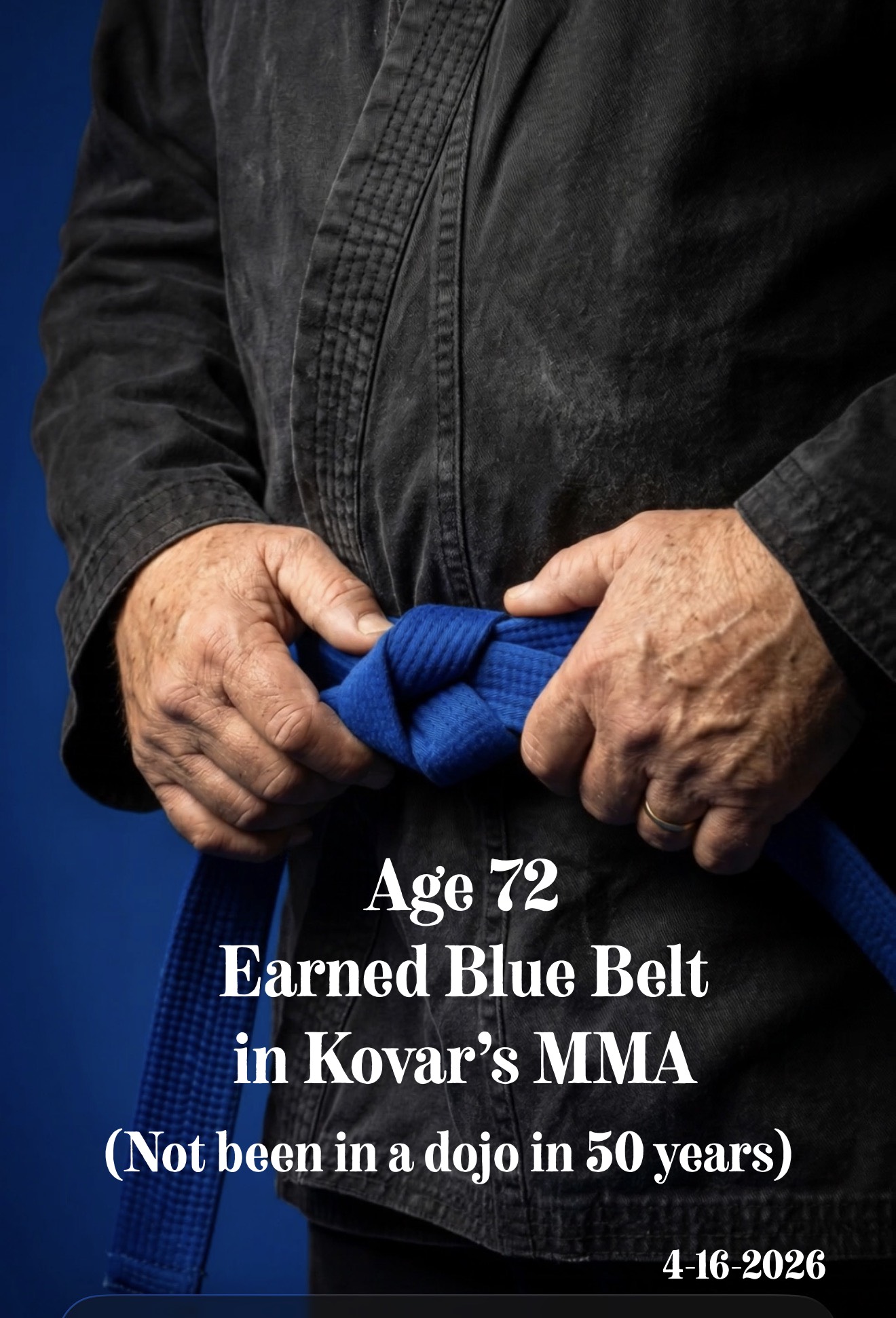
Days before I turned 72 years old last month, I received my purple belt in MMA.
I started taking weekly classes at Kovar’s Mixed Martial Arts days after I turned 71 in 2024.
Just under one year later, right before turning 72 last month, I received my purple belt.
While the purple belt matches my purple Lamborghini Urus SE, I’m not stopping here.
Blue Belt is next.
I won’t stop there, either.
Red belt is after that.
I’ve publicly declared I intend to earn my Black Belt by age 75 – if not sooner.
This goal is not easy.
This past year has not been easy.
But if it were easy, I wouldn’t be writing about it.
You can hear Hanshi Dave Kovar, the creator of the brand of MMA I’m training in, interview me at https://youtu.be/cwJ_ZiVs_gY?si=gd0Smpbn0gVaBW0Z
What are you going to do to make 2026 great?
The time to begin is NOW.
Expect Miracles.
Ao Akua,
Dr Joe
This should make you think…
The new Frankenstein film on Netflix is supposed to be a gothic thriller — thunder, lightning, and existential dread. But as I watched it, something unexpected happened.
I started seeing it not just as a horror story… but as a perfect metaphor for Internal Family Systems (IFS), the therapeutic model that says we’re all made of inner “parts,” each trying to protect us, heal us, or help us survive.
Stick with me. I promise this will make you rethink the monster — and maybe even yourself.
In IFS, the deepest wounded parts of ourselves — the ones carrying shame, fear, trauma, loneliness — are called Exiles.
They’re exiled from our awareness because they’re too painful to face directly. They’re the parts of us we try to bury because we think they’re dangerous.
Isn’t that exactly what Victor Frankenstein does?
He creates life — this vulnerable, confused, newborn consciousness — and then immediately abandons it.
He judges it.
He fears it.
He pushes it away.
Victor’s “monster” isn’t monstrous at all.
He’s an exiled part who never got love, compassion, or guidance. And like any Exile, he eventually erupts in ways that terrify the system.
IFS teaches that when we exile a part of ourselves, it doesn’t disappear. It grows stronger in the shadows and eventually bursts out — sometimes as anxiety, sometimes as anger, sometimes as sabotaging behavior.
In the movie, the creature is the physical embodiment of everything Victor doesn’t want to face: guilt, regret, imperfection, vulnerability.
Just like our Exiles.
In IFS, when an Exile’s pain threatens to erupt, two other groups of parts step in: Managers and Firefighters.
Managers try to keep life orderly and controlled. They’re perfectionists, planners, suppressors.
Firefighters rush in during emergencies — addictions, outbursts, impulsive behavior.
Now let’s look at Victor Frankenstein again.
He’s the ultimate Manager part — obsessively controlling, avoiding emotion, intellectualizing everything.
Creating life was never about compassion; it was about mastery, achievement, and control.
“If I can control life itself, I never have to feel my own fear of death.”
When his creation shows signs of emotional need, Victor’s Firefighters show up. He runs, hides, denies, numbs, lashes out, blames. He does anything to avoid feeling the Exile’s pain — the very pain he created.
And just like in real internal systems, the more these protectors panic, the more chaos they create.
This is straight IFS:
What looks like rage is almost always pain in disguise.
The creature’s fury in the Netflix film isn’t about destruction — it’s about abandoned longing.
He wanted identity.He wanted belonging.
He wanted a place in the world.
He wanted to be mirrored, known, and loved.
Isn’t that what every Exile wants?
When the creature finally confronts Victor, he isn’t asking for revenge — he’s asking for recognition. He wants Victor to see him not as a mistake, but as a part of him.
How many of our parts are doing the exact same thing?
IFS says beneath all our parts — the angry ones, the fearful ones, the perfectionistic ones, the lonely ones — there is Self: calm, compassionate, connected, curious, courageous.
Self is the healing force.
And that is exactly what the Frankenstein story lacks.
There is no Self-energy.
No compassion.
No integration.
No courageous turning-toward.
If Victor had met the creature with Self — instead of fear, shame, or avoidance — the entire story would have transformed. The creature never needed perfection. He needed presence.
IFS teaches that healing doesn’t come from eliminating parts; it comes from befriending them.
Seeing them.
Soothing them.
Inviting them back home.
If Victor had done IFS, he would have realized:
The monster wasn’t the mistake. The abandonment was.
The Netflix Frankenstein is a warning tale, yes — but not about science gone wrong.
It’s about what happens when we exile parts of ourselves.
IFS shows us a different ending. A hopeful one.
Where the “monster” becomes a teacher.
Where the parts become allies.
Where the system finds harmony.
Maybe that’s why this movie hits so deeply:
It reminds us that inside all of us is a creature waiting to be understood — and a creator learning how to love what he made.
That’s not scary, is it?
Love
Dr Joe
(and Chappie)
PS – In case you are new to all this, begin here:
The clearest, warmest, most accessible introduction to IFS. Dr. Schwartz (the founder) explains the entire model in simple language, with stories and examples that make the “parts” inside us feel natural and relatable.
Perfect for understanding why your “inner monster” is never actually a monster.
This is the concise “IFS handbook.” Still beginner-friendly but a bit more structured and practical.
If Frankenstein shows what happens when parts become exiled, this book shows how to welcome them home.
A beautiful, immersive set of teaching stories about parts, protectors, exiles, and Self.
Great for people who learn through narrative — making it easy to see how a misunderstood “creature” (inner or outer) behaves when it has no compassionate Self to guide it.
Not strictly an IFS book, but several chapters dive into IFS, trauma, and how unhealed wounds create “inner exiles.”
Helps a newbie understand why trauma creates inner monsters and why compassion, not suppression, is the medicine.
To tie it all together, reading Shelley’s original story — especially in editions with psychological or philosophical notes — reveals how deeply the narrative mirrors IFS.
The creature is the ultimate Exile, Victor is the panicked Manager, and every tragedy is caused by refusing to stay in Self.
What Does It Mean to Do the Impossible?
by Dr. Joe Vitale
Here’s the sound bite:
“Doing the impossible means erasing the limits in your mind
and remembering that the Divine never had any.”
Now, let’s unpack that.
Most people believe “impossible” is a wall. It’s a stop sign painted by fear, logic, and past conditioning. It’s what society teaches to keep you safe, small, and predictable. But safety rarely births miracles. The moment you label something impossible, you close the door on the very energy that could make it happen.
When you do the impossible, you don’t defy the laws of reality — you redefine them.
You enter a space beyond logic, where inspiration leads and the intellect follows.
You transcend your beliefs about who you are, what’s allowed, and what’s probable.
That’s what Zero Limits is all about.
In my movie Zero Limits, inspired by the ancient Hawaiian practice of Ho’oponopono, we explore what happens when you clean away the mental and emotional data that says, “You can’t.”
The practice teaches that we are not broken, but blocked; not flawed, but fogged.
Every “impossible” situation is really a projection of our inner limits.
When you release those limits through cleaning — by saying “I love you, I’m sorry, please forgive me, thank you” — life reorganizes itself.
Miracles happen.
I’ve seen it countless times.
People healed when doctors said they couldn’t.
Debts dissolved when logic said they wouldn’t.
Dreams realized decades after hope said they shouldn’t.
When you return to zero — that state of pure awareness before thought — you discover there was never any impossibility at all.
Doing the impossible isn’t about fighting reality. It’s about aligning with the deeper reality that you are the creator of your experience. You are the channel through which miracles flow.
The only true limitation is the one you agree to believe.
When I began filming Zero Limits, there were endless reasons to stop. The budget seemed impossible. The logistics seemed impossible. The timing, the marketing, the release — all impossible.
Yet, each “impossible” dissolved the moment I took one inspired step forward and trusted the clearing process.
Now the movie has been nominated for over 39 awards and has won 27,
streaming worldwide right now on Apple TV, Amazon Prime,
and ZeroLimitsMovie.com.
That’s what happens when you live at zero: the Universe does the heavy lifting.
So, what does it mean to do the impossible?
It means surrendering the ego’s insistence that it must know how.
It means trusting inspiration more than information.
It means turning “no way” into “now way.”
It means remembering that what you call “impossible” is just something you haven’t cleaned on yet.
At zero, there are no limits. Only love, only potential, only the Divine saying, “Let’s go.”
Knowing this, what will you do today?
Expect Miracles.
Love
Ao Akua
Dr. Joe Vitale